

Modern adhesive application technology saves a manufacturer 48% of electricity

JTI Switzerland produces 47 million cigarettes a day at its plant in Dagmersellen for brands such as Camel and Winston. On six packaging lines running in two shifts, 50 cartons of cigarettes are always packed into a shipping box. When the adhesive technology manufacturer Robatech first approached the company with the possibility of reducing energy consumption by 30%, they were cautious about the decision to implement it. "From a purely physical point of view, roughly 0.1 kWh is needed to melt 1 kg of adhesive granules," explains Adrian Vonesch, head of maintenance and service at JTI. "It is always the same amount of energy. The savings must therefore come from the design of the melter, the heated hose and the application head." JTI's maintenance team decided to carry out an operational test, which was also supported by the company's management.
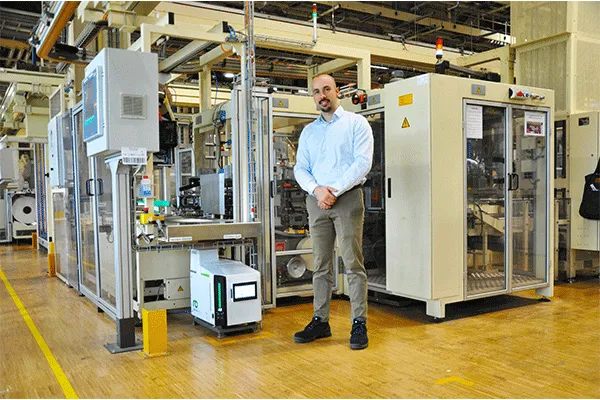
The baseline conditions were defined in February 2022 and a separate electricity meter was installed on the test line. For 14 days, JTI staff recorded the current adhesive and energy consumption of the existing application system in the horizontal cartoning machine. Robatech then used a one-day maintenance window to install a test system free of charge: a Vision S melter, two Performa heated hoses and two AX Diamond application heads. The new application system was put into operation the same day. A further 14 days of measurement followed. Martin Berli of Robatech recalls: "The old system remained installed in parallel standby mode. This was a kind of insurance for JTI. However, I knew that the risk of a production outage was low. Our adhesive application systems are reliable and their operation is trouble-free."
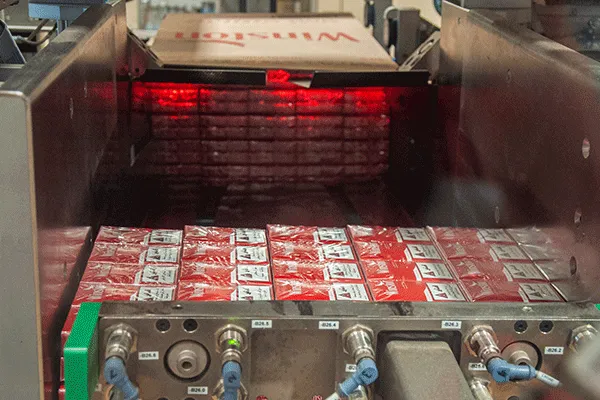
48% LESS ELECTRICITY DURING ADHESIVE APPLICATION
After the trial operation, the measurements were evaluated. "We expected energy savings of 33%, because we know that Robatech is careful with its figures," summarises Adrian Vonesch of JTI. "The fact that at the end of the test we measured 48% lower energy consumption compared with another manufacturer's system surprised everyone." It is clear that the new Vision and Performa systems bring greater energy efficiency to industrial adhesive application. "Using new insulation techniques, our development team managed to significantly reduce the heat radiation from the melter and the heated hose," says Martin Berli. "The Performa is not hot to the touch on the outside like other hoses. In addition, the Performa is fully insulated at the connection points, and we optimally adapt the hose length to the production. In this way, we reduce unnecessary heat loss."
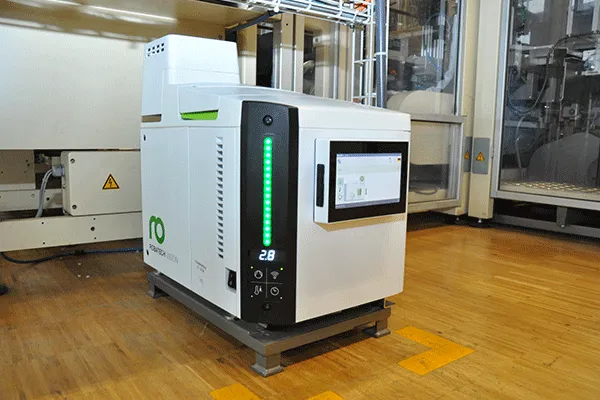
24% LOWER ADHESIVE CONSUMPTION
Martin Berli also states that since the operational test, 24% less hot melt adhesive has been needed to glue the cartons on the former test line. "It is simply a question of optimal setting parameters. Our service team knows them and can set them for any adhesive application system."
WANT A SIMILAR SOLUTION? USE GREENSAVER
If you too want to reduce costs, and not just those related to electricity, take advantage of our new GREENSAVER programme. Thanks to our effective audit, you will find out exactly in which areas you can achieve savings and what their return on investment is.
